Thursday, April 30, 2015

Plants are looking great!

It has been about 2 weeks since we started planting and things are looking great. Since we grow organically, we cover most of our plants with row covers and when we lift the covers it's always an awesome surprise to see them healthier and stronger. We have cabbages and broccoli that have doubled in size. Our peas are starting to grab on to the fences. And, beets & carrots are starting to do their thing.
This weekend, we will be planting tomatoes,  peppers, & tomatillos!

Friday, April 24, 2015

Planting styles

When it was finally time to plant our transplants, it was a bit of a memory test. How did we do that again? We tilled the earth, supplemented with compost, and mounded our beds. Now what?

 Each row has approximately 60- 120 plants in it.  Since we plant without the use of fancy machinery, that means bending, reaching, or kneeling A LOT. We both have different styles of planting, but I find Damian's planting style quite amusing.  

Damian's booty in the air planting style! LOL
The spacing depends on how much space each plant needs to grow. We try to plant densely so that the weeds will hopefully not have a chance to grow, but we still have to give some plants more room than others because of their root systems and nutrient needs. With some plants (kales, tomatoes, chards) that will continuously grow throughout the summer, we have decided to cover the soil with black plastic and plant them through the black plastic. The plastic acts as an additional weed suppressor, but we have to be careful not to cook the roots of the plants at the same time. We have found that placing straw or burlap on top of the plastic can help decrease the roots being killed by the heat.


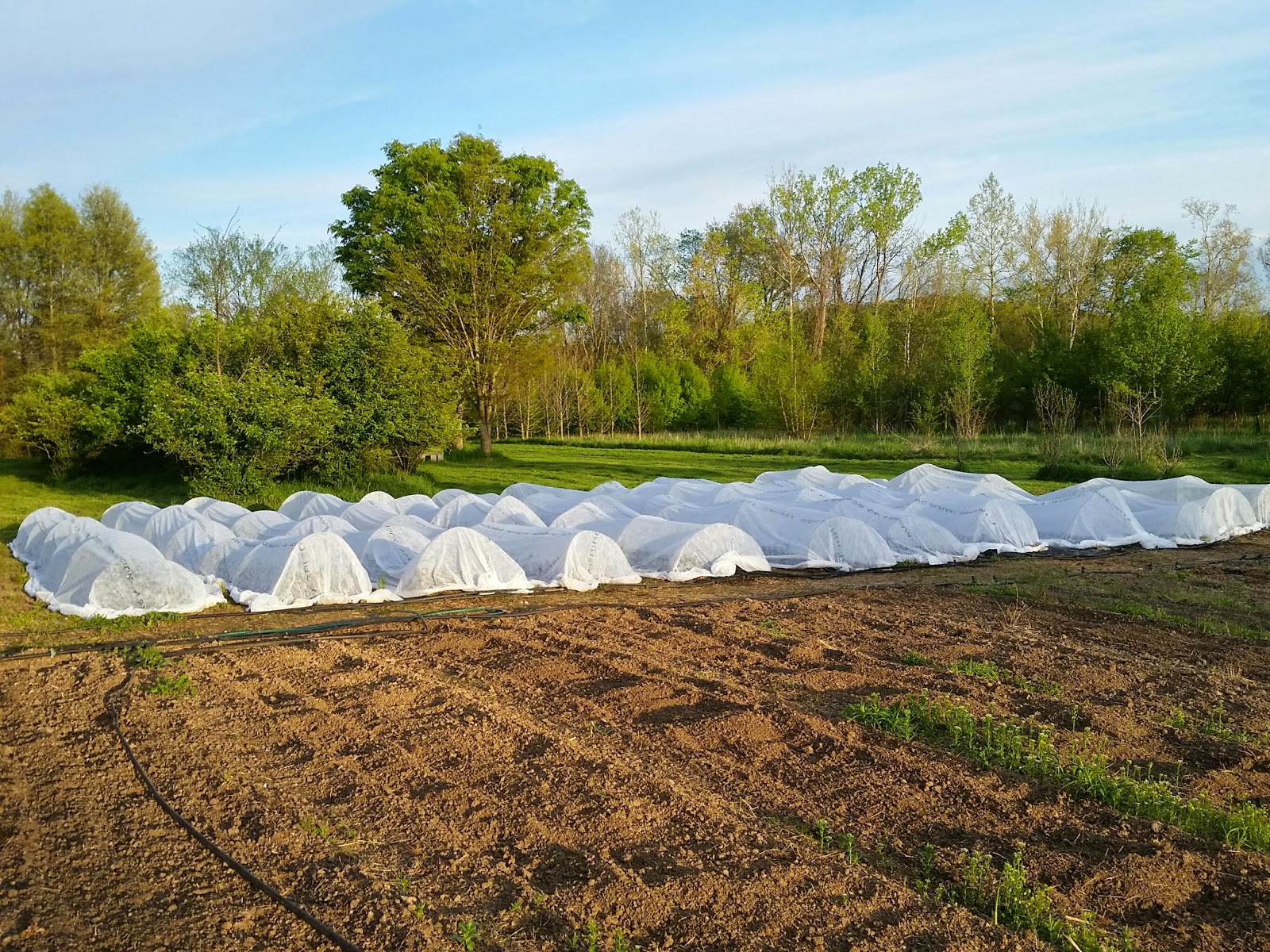
At the end of the day, we put hoops around our plants and use row covers in order to protect them from bug pressure and give them some extra warmth on cold nights.

 
So far, we have the following planted & are list keeps growing:
  1. potatoes
  2. onions
  3. peas
  4. carrots
  5. beets
  6. turnips
  7. lettuce
  8. broccoli
  9. cauliflower
  10. cabbages
  11. kale
  12. rainbow chard
  13. fennel
  14. pac choi
  15. kohlrabi
  16. endive

Compost and Volunteers


Already this year, we have been blessed to make connections with great people. We met a man named Jess at the Missouri Organic Association conference that lives 10 minutes away from us and he was generous enough to loan us his trailer for a day so we could pick up compost from the St. Peters Earthway Centre. That was so awesome. 

We purchased 10 yards of compost to help us add organic matter into our soil and continue to break up the Missouri clay. Without the compost in our soil, plant roots have a hard time pushing through the clay and growth is often stunted. Compost also helps the soil retain moisture and feed the plants with nutrients that are not readily available in the clay. The compost is organic and helps prevent us from having to use a lot of extra fertilizers. If you ever see the ground "cracking" on hot days, that usually means that there is more clay than organic matter in the soil. We try to prevent that as much as possible. 
We have also been blessed by friends and strangers reaching out and volunteering at our farm. My friend, Dr. Jessica Taylor, wanted to get out of the house and come see our farm. Well, we put her to work & we planted over 100 potatoes that day. She admitted that it was great exercise and really fun to be out at the farm. 
Then, we received a call from a young woman named Megan, who had worked as a Agricultural Educator in Guatemala through the Peace Corps. She missed being outside and farming and wanted to volunteer at our farm. What a blessing! She jumped in and started farming, wheel-barreling compost, and planting with us. She was such a HARD WORKER and cool person to get to know! Later, we found out that she lives two streets away from us in St. Peters. What are the chances of that??! 
We love having the help, conversations, and good energy down on our farm! If you feel the urge to get outdoors and get some "dirt therapy," call us at 636-262-9792 or email us at info@leafygreensfarm.com anytime. We will teach you what we know and hopefully more people can grow, eat, and share produce with others.
Planting, preparing, and getting stuck

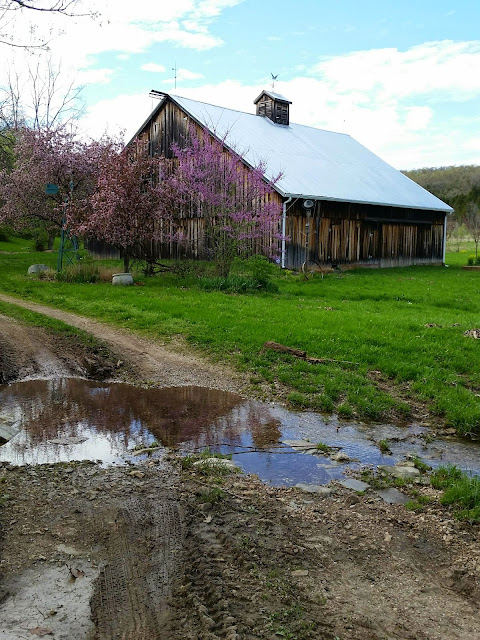
This April was pretty wet at the beginning. At the farm, small streams had turned into little lakes and flash flooded. Driving around the farm when it was this wet led to either MUD RUTS or GETTING STUCK. And, we did both. I was the first one to get my car stuck in the mud & it took 40 minutes of placing cardboard under my tires to get any traction. Dr. Granger was the second one to get stuck, only he got his tractor stuck while trying to help us till our rows. Damian tried to pull the tractor out with his truck, but almost got that stuck. Ha! Luckily, Dr. Granger had a "back-up" tractor that they used to pull it out. These are the humbling, time-consuming lessons we learn and try to laugh about. 
 

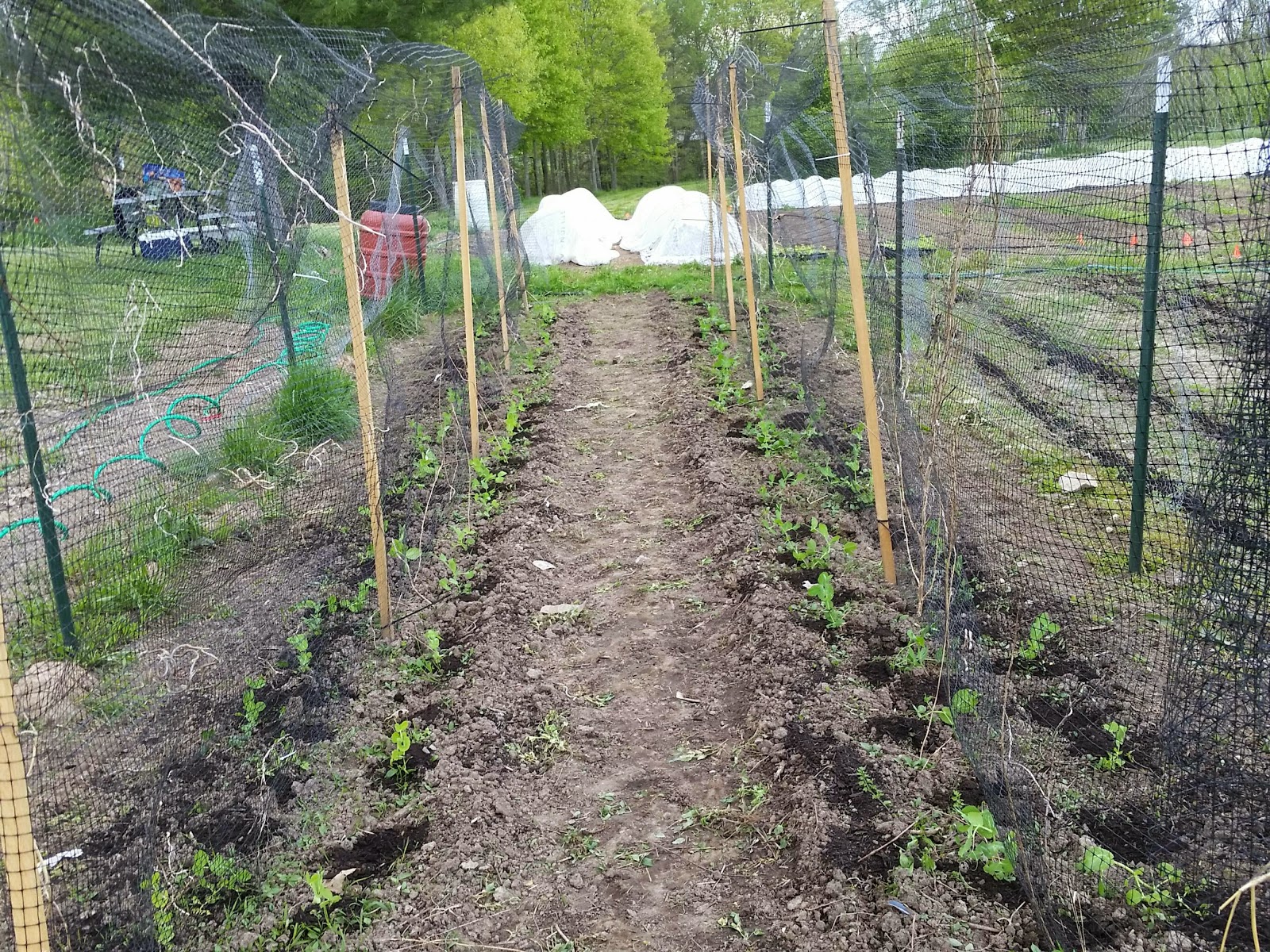
Luckily, there is always something to do at the farm. When it is wet, it is the best time to put up fences and clean up around the farm. Kathy, our farm friend, helped us put up support fences for the peas and beans we will be growing on the farm. Kathy tells great stories and we laugh whenever she is around. Since, we cannot control that deer walk or run through our plot, we just try to protect the items they consider extra tasty. We have found that they really love peas and beans, so we put a make-shift fence around them. It worked well last year and we hope that it will work well again this year. Grow peas! Grow!
  
Pea fence with TINY pea plants growing at the base

Saturday, March 21, 2015

Breaking Ground at Leafy Greens Farm! 2015 CSA Program here we come!

It is tricky to find the right times to plant in the Spring. Sometimes, it is too wet to plant. We want to be able to till the soil into a fluffy bed for the plants, but cannot do this when everything is gooey mud. Sometimes, it is too cold to plant and the ground can still be frozen. We have to recognize what plants can survive the low nightly temperatures and which ones cannot. Peas, carrots, beets, turnips, and a few more plants are able to be sown into the ground in February and March. You can also plant potatoes anytime after St. Patrick’s Day. Our cabbages, broccoli, and cauliflower plants are also very hardy and will be planted outdoors in a few weeks after the last frost date in April.

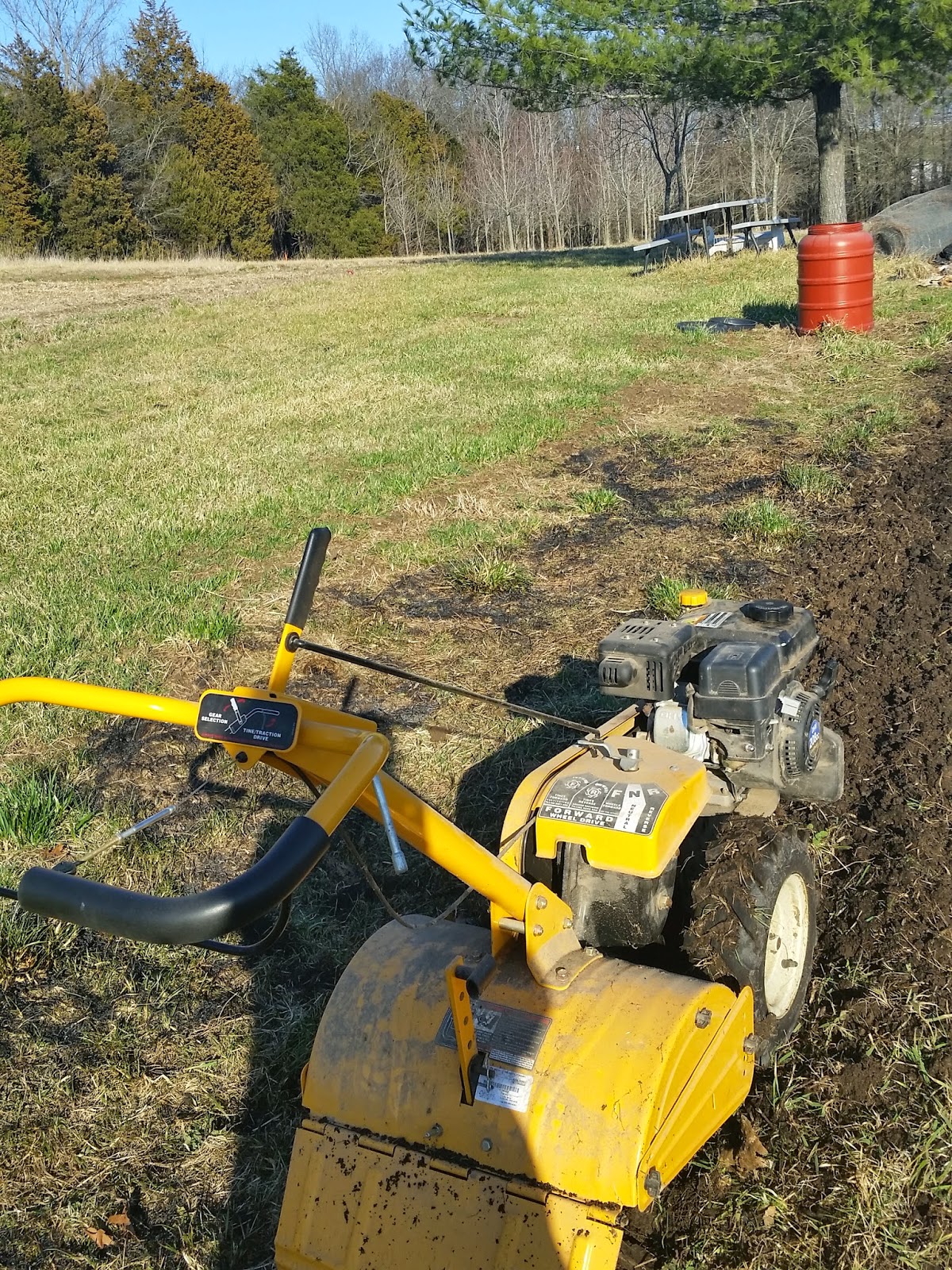
We were able to find the perfect day to go till up a few rows on our plot, not too wet and not too cold.


It felt so good to till up the earth and put our hands in it. We created a couple of fluffy beds for carrots and beets. Then, we planted two rows of peas- sugar snap and snow peas. We planted until the sun went down.A day after we planted, it rained! Yay! Hopefully those seeds are germinating and getting ready to push through the soil in the next weeks. I can’t wait to see the green leaves start growing outdoors on our farm. Stay tuned for more updates.

Our Basement Nursery... And the Process of Getting Ready

We started planting seeds in January and now we have some beautiful plants growing. We do not own a greenhouse yet, but we do not let this stop us. We have a basement, some shelving units, and shop lights. With a little creativity, we make it work!

While it is cold and uninhabitable for most plants outdoors, we are in our basement planting seeds. 


We start the plants on heat mats to help seed germination speed up. Once the seeds are germinated, we move them under the shop lights and let them soak in the light. 


Eventually, we start taking our plants outdoors for short periods of times to help them acclimate to the outdoor temperatures and light. This process is called “hardening.” We bring them in each evening and set them on our dining room table to help them avoid the cold evening temperatures.

Baby basil plants

Our cabbage plants outdoors at sunset

Bringing plants into our dining room in the evening
 Eventually, the plants will be strong enough to stay out all day and night. This process takes a few weeks. We can’t wait to start planting them outdoors in April.  2015 CSA season here we come!

Mushroom Experiments

We are blessed to know farmers and gardeners who make things happen. Our friends at Gateway Garlic Urban Farm hosted a Seed Swap and Mushroom Bucket workshop in January. It was a beautiful day & a great turn out!  We were able to share seeds and find new seeds to grow this year.


One of the most fascinating things was the mushroom bucket workshop. They had us bring our own buckets, drill holes in the bucket, & filled them with straw dipped in boiling water. As the straw was being placed into the bucket, they had us shake "mushroom spawn" or the seeds in the bucket. Then, we took them home and water them. In a month, I was harvesting these beauties. They are Dove Oyster mushrooms.
This is what they look like when experts grow them
What mine started like before they got big!


After cutting them, I made a fabulous mushroom, onion, spinach, and tofu dish seen here. I can't wait until more grow!