 Kale - The dark, leafy green vegetable packed with vitamins A,C, & K. It is also a good source of protein.
Mustard Greens
- The peppery leaves of the mustard
plant are a popular soul food ingredient, ranking second only to collard
greens. The leaves are a rich, dark green and have a pungent mustard flavor. It
is packed
with vitamins A,C, K, and E.
Scallions/Spring
Onions - It is also a good source of Thiamin,
Riboflavin, Magnesium, Phosphorus and Copper, and a very good source of Dietary
Fiber, Vitamin A, Vitamin C, Vitamin K, Folate, Calcium, Iron, Potassium and
Manganese.
Rainbow Chard - is a leafy
green vegetable
often used in Mediterranean cooking. Swiss chard is high in vitamins A, K, and C.
Pak Choi - These leafy greens are a popular
Chinese vegetable that are similar to bok choi and spring greens. Pak choi has
pretty paddle-shaped dark green crisp and crunchy leaves with a thick creamy
stalk and a mild flavour.
Basil - It
is a very good source of Dietary Fiber, Vitamin A, Vitamin C, Vitamin K,
Vitamin B6, Folate, Calcium, Iron, Magnesium, Phosphorus, Potassium, Zinc,
Copper and Manganese.
Dill - Providing a tangy addition to pickles, salad
dressing and fish dishes. Dill is native to southern Russia, western Africa and
the Mediterranean region. Dill is high in Vitamen C and manganese.
|
Friday, May 22, 2015
CSA Box #1 - Recipes


Sunday, May 10, 2015
It's the little things, even if it is a lot of work

The one thing that we hear over and over again from people that we talk to about farming is, "wow, that sounds like a lot of work." Yes...yes, it is, but we do it because we love it and we want to know where our food comes from.
Already, we (and our volunteers) have worked about 150 hours planting, preparing, and weeding at the farm this year and it is only May 10th. So, I guess some people might consider that a lot of work. However, we try to focus on how beautiful the little things are instead of looking at it like one lump of a "lot of work."
We actually look forward to going to the farm and being outdoors in the sunshine more than our actual jobs sometimes. We like farming more than dining at fancy restaurants, going shopping for expensive stuff, and watching the latest movies. There is something beautiful about seeing a tiny ladybug on a leaf, finding a frog camouflaged in the dirt, and seeing gardening snakes slither by. You can even find beauty in the dandelions or raindrops sitting on spinach leaves.


Chickens!!

Check out what is new this year for Leafy Greens Farm CSA. Yes, you see it right. We will be offering chickens with our CSA. Each CSA member, will get one free and ready-to-cook chicken this year. CSA members can purchase additional chickens throughout the summer and fall season. Typically, we stick to growing just vegetables, but we are branching out and trying something new this year.
Damian's parents, Cathy & Terry, will be raising our chickens at Caty Ridge Farms in Poyner, MO. Currently, they are raising a type of chicken called fryer chickens. They have a beautiful property, great chicken coop, and a huge amount of land where the free-range chickens can roam within the fence lines. They also have committed to only using organic feed for the chickens and raising them with lots of love.

We can honestly say that we have never had a "farm-fresh" chicken or known the farmers that raised the chickens that we have eaten. This time, it will be different. The chicken farmers are our family. That is what we love about farming and why we want to share with others. We want to know where our vegetables and meats come from and feel assured that they were grown without the use of harmful chemicals and additives. Also, we want our customers to know where their food comes from so they can make informed choices about their health and food.
We have also heard that free-range chickens taste so much better than store-bought chickens. We can't wait to find out!


Thursday, April 30, 2015
Plants are looking great!
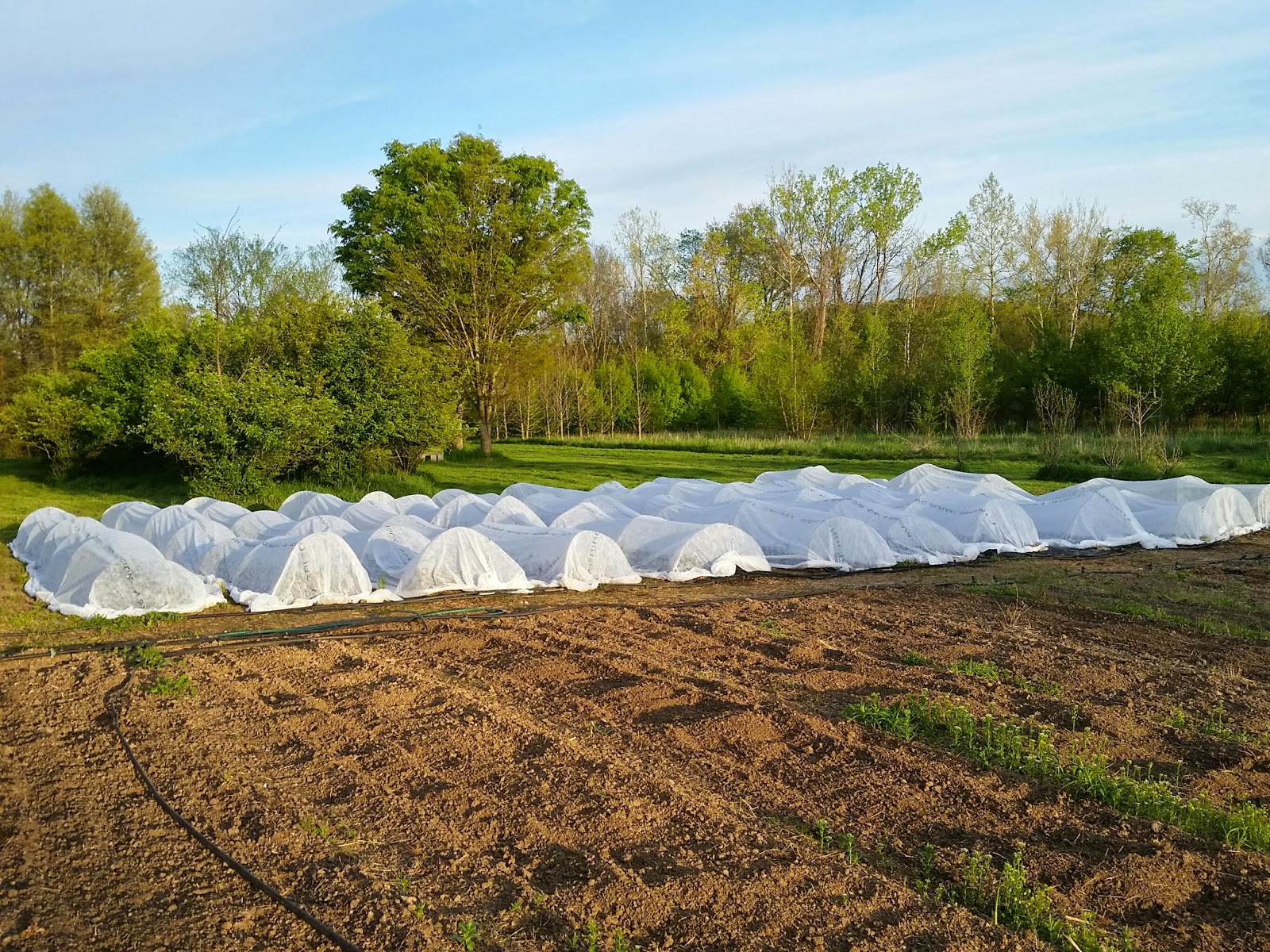
It has been about 2 weeks since we started planting and things are looking great. Since we grow organically, we cover most of our plants with row covers and when we lift the covers it's always an awesome surprise to see them healthier and stronger. We have cabbages and broccoli that have doubled in size. Our peas are starting to grab on to the fences. And, beets & carrots are starting to do their thing.
This weekend, we will be planting tomatoes, peppers, & tomatillos!



Friday, April 24, 2015
Planting styles

When it was finally time to plant our transplants, it was a bit of a memory test. How did we do that again? We tilled the earth, supplemented with compost, and mounded our beds. Now what?
Each row has approximately 60- 120 plants in it. Since we plant without the use of fancy machinery, that means bending, reaching, or kneeling A LOT. We both have different styles of planting, but I find Damian's planting style quite amusing.
 |
| Damian's booty in the air planting style! LOL |
The spacing depends on how much space each plant needs to grow. We try to plant densely so that the weeds will hopefully not have a chance to grow, but we still have to give some plants more room than others because of their root systems and nutrient needs. With some plants (kales, tomatoes, chards) that will continuously grow throughout the summer, we have decided to cover the soil with black plastic and plant them through the black plastic. The plastic acts as an additional weed suppressor, but we have to be careful not to cook the roots of the plants at the same time. We have found that placing straw or burlap on top of the plastic can help decrease the roots being killed by the heat.


At the end of the day, we put hoops around our plants and use row covers in order to protect them from bug pressure and give them some extra warmth on cold nights.


- potatoes
- onions
- peas
- carrots
- beets
- turnips
- lettuce
- broccoli
- cauliflower
- cabbages
- kale
- rainbow chard
- fennel
- pac choi
- kohlrabi
- endive
Compost and Volunteers

Already this year, we have been blessed to make connections with great people. We met a man named Jess at the Missouri Organic Association conference that lives 10 minutes away from us and he was generous enough to loan us his trailer for a day so we could pick up compost from the St. Peters Earthway Centre. That was so awesome.
We purchased 10 yards of compost to help us add organic matter into our soil and continue to break up the Missouri clay. Without the compost in our soil, plant roots have a hard time pushing through the clay and growth is often stunted. Compost also helps the soil retain moisture and feed the plants with nutrients that are not readily available in the clay. The compost is organic and helps prevent us from having to use a lot of extra fertilizers. If you ever see the ground "cracking" on hot days, that usually means that there is more clay than organic matter in the soil. We try to prevent that as much as possible. 

We have also been blessed by friends and strangers reaching out and volunteering at our farm. My friend, Dr. Jessica Taylor, wanted to get out of the house and come see our farm. Well, we put her to work & we planted over 100 potatoes that day. She admitted that it was great exercise and really fun to be out at the farm.

Then, we received a call from a young woman named Megan, who had worked as a Agricultural Educator in Guatemala through the Peace Corps. She missed being outside and farming and wanted to volunteer at our farm. What a blessing! She jumped in and started farming, wheel-barreling compost, and planting with us. She was such a HARD WORKER and cool person to get to know! Later, we found out that she lives two streets away from us in St. Peters. What are the chances of that??!


We love having the help, conversations, and good energy down on our farm! If you feel the urge to get outdoors and get some "dirt therapy," call us at 636-262-9792 or email us at info@leafygreensfarm.com anytime. We will teach you what we know and hopefully more people can grow, eat, and share produce with others.


Planting, preparing, and getting stuck
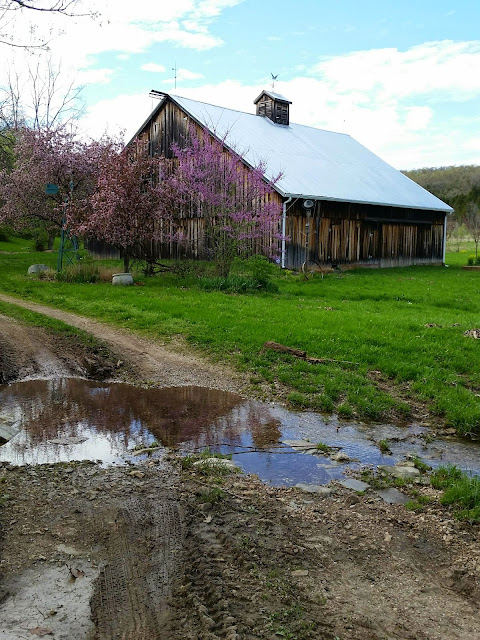
This April was pretty wet at the beginning. At the farm, small streams had turned into little lakes and flash flooded. Driving around the farm when it was this wet led to either MUD RUTS or GETTING STUCK. And, we did both. I was the first one to get my car stuck in the mud & it took 40 minutes of placing cardboard under my tires to get any traction. Dr. Granger was the second one to get stuck, only he got his tractor stuck while trying to help us till our rows. Damian tried to pull the tractor out with his truck, but almost got that stuck. Ha! Luckily, Dr. Granger had a "back-up" tractor that they used to pull it out. These are the humbling, time-consuming lessons we learn and try to laugh about.


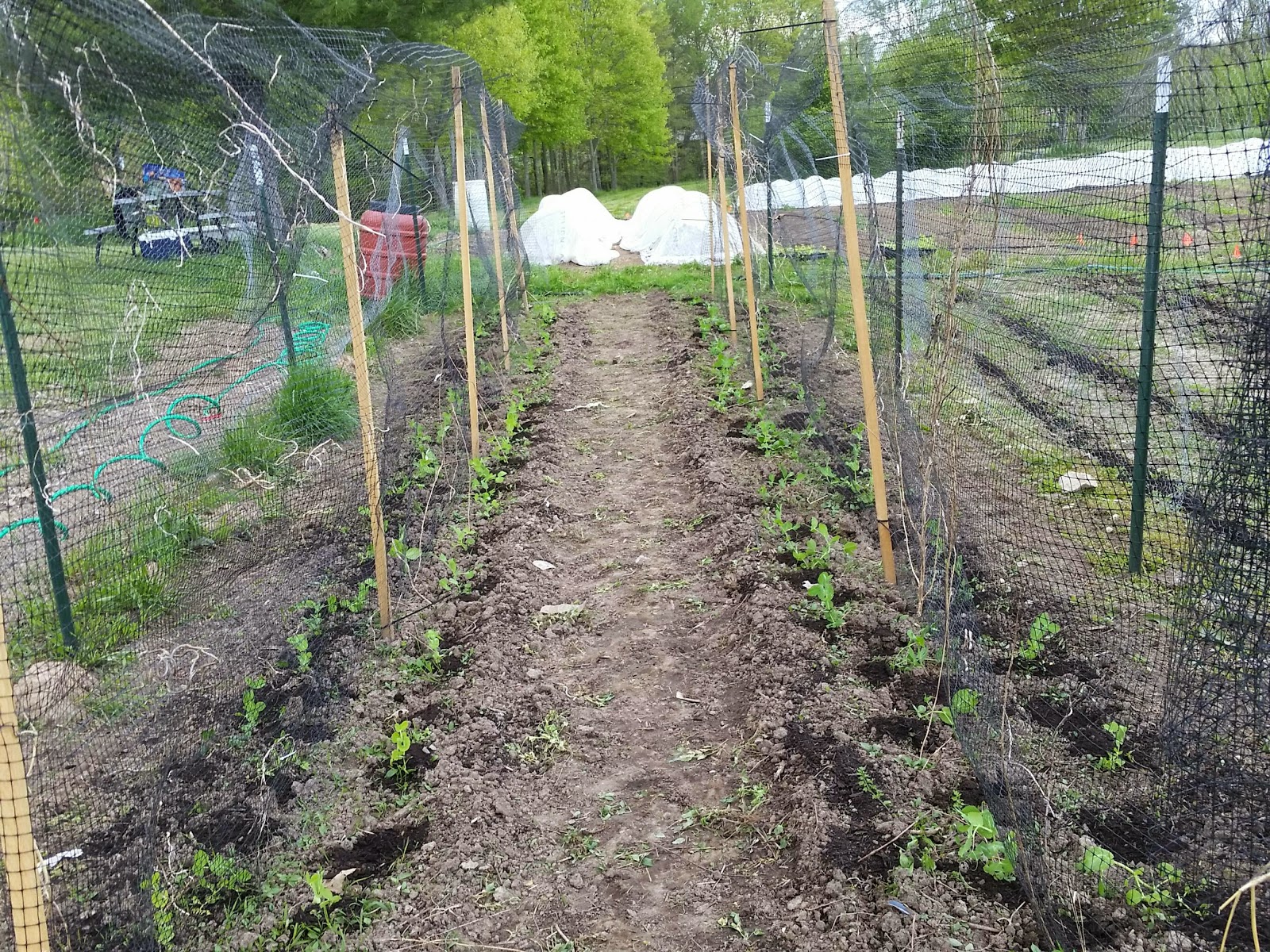
Luckily, there is always something to do at the farm. When it is wet, it is the best time to put up fences and clean up around the farm. Kathy, our farm friend, helped us put up support fences for the peas and beans we will be growing on the farm. Kathy tells great stories and we laugh whenever she is around. Since, we cannot control that deer walk or run through our plot, we just try to protect the items they consider extra tasty. We have found that they really love peas and beans, so we put a make-shift fence around them. It worked well last year and we hope that it will work well again this year. Grow peas! Grow!


 |
| Pea fence with TINY pea plants growing at the base |

Subscribe to:
Posts (Atom)